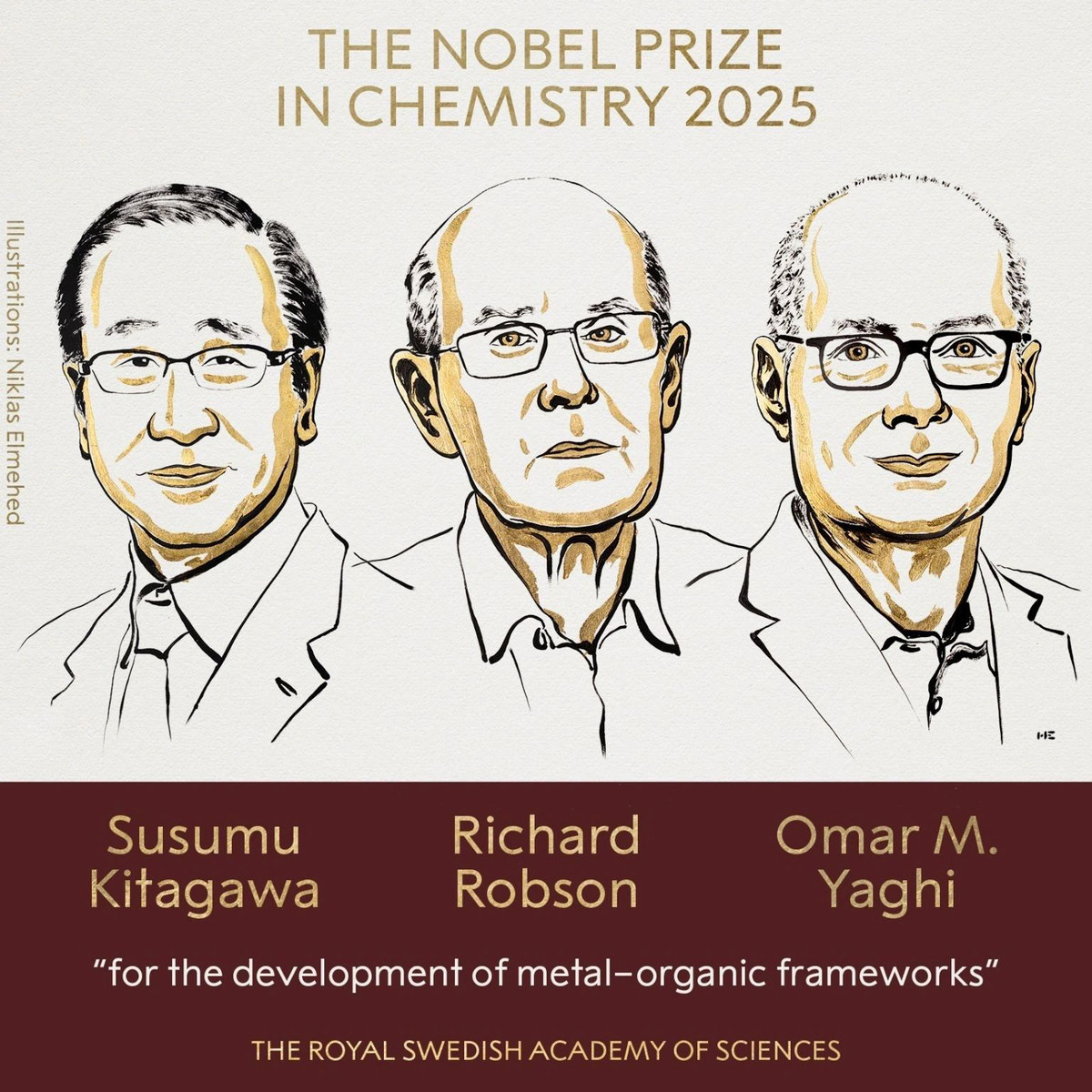
This year’s Nobel Prize in Chemistry was awarded to Kitagawa, Robson, and Yaghi for their game-changing work on metal-organic frameworks (MOFs). These “molecular sponges” are rewriting the playbook for CO₂ capture, selective gas storage, clean water generation, and advanced catalysis, unlocking technologies that seemed impossible just a decade ago.
MOFs offer a new frontier of tunable, high-surface-area materials that tackle some of the world’s toughest challenges, from climate resilience to resource efficiency. Their flexibility creates extraordinary new opportunities for energy and environmental innovation.
At Planck Technologies, we’re racing ahead to bring the promise of MOFs and other high-potential advanced materials out of the lab and into real-world solutions. By fusing deep material science, AI-powered material selection, and system engineering, we’re accelerating commercial adoption, so the impact of these Nobel-worthy materials is felt where it matters most.